
SEXTANT
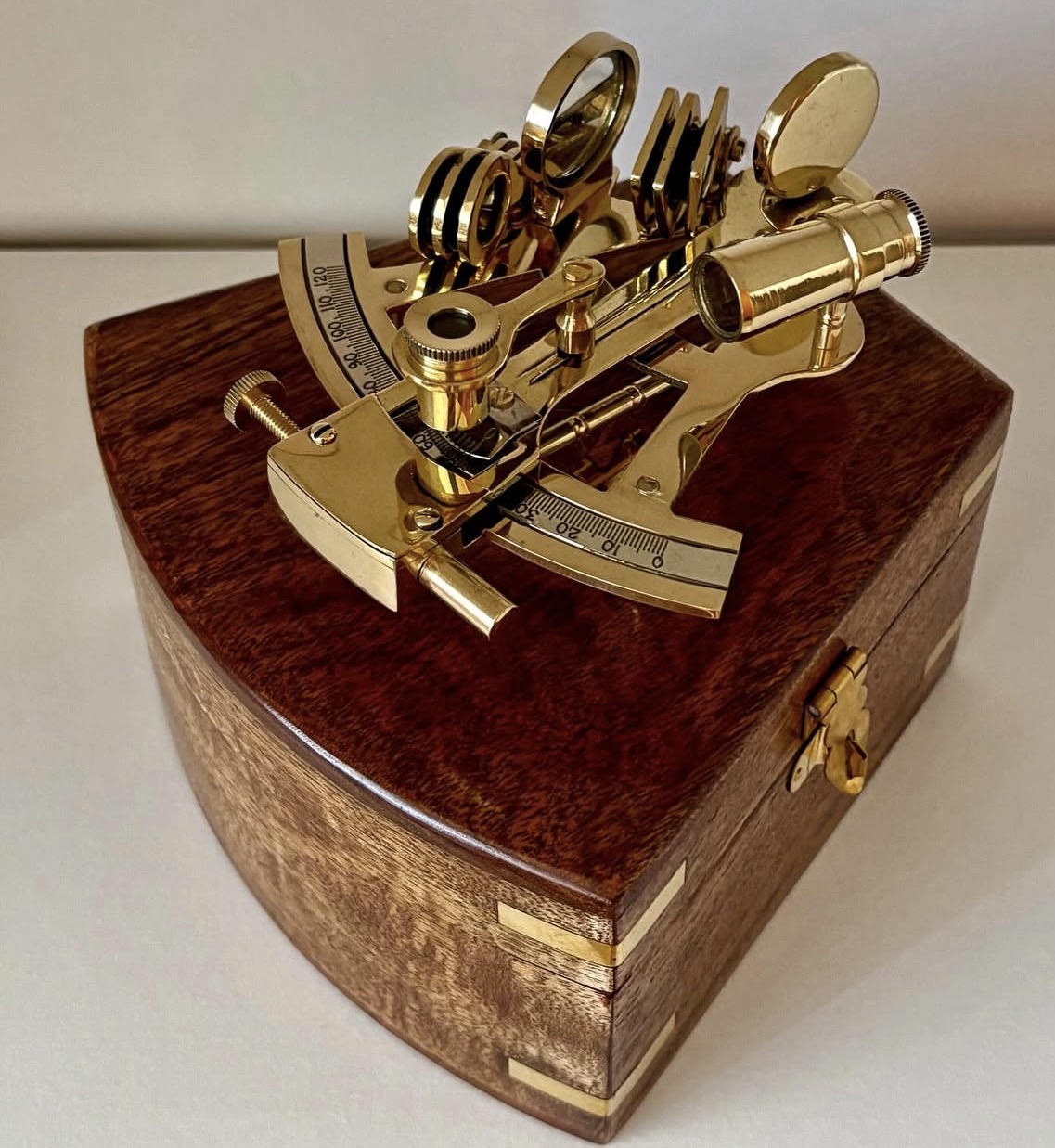
The sextant was designed for maritime navigation to determine the angle between the sun and the horizon. Invented in the 1930s by John Hadley (1682-1744), an English mathematician, and Thomas Godfrey (1704-1749), an American inventor, it quickly replaced the astrolabe and the octant as the principal instrument used for navigation. A sextant is made up of small telescope, to focus on the horizon, two mirrors (reflecting the image of the sighted object), shades (for the sun), a moving arm and a scaled arc. The scale of a sextant has a length of? of a circle (60º), hence the sextant’s name.
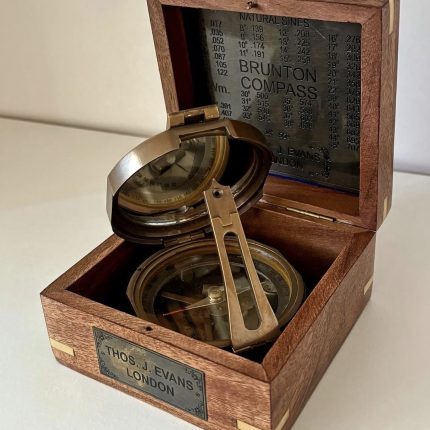
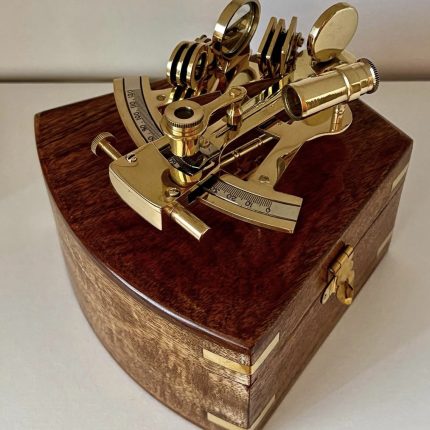
Brass sextant with rosewood box elegantly decorated with brass inlays.
The sextant was designed for maritime navigation to determine the angle between the sun and the horizon. Invented in the 1930s by John Hadley (1682-1744), an English mathematician, and Thomas Godfrey (1704-1749), an American inventor, it quickly replaced the astrolabe and the octant as the principal instrument used for navigation. A sextant is made up of small telescope, to focus on the horizon, two mirrors (reflecting the image of the sighted object), shades (for the sun), a moving arm and a scaled arc. The scale of a sextant has a length of? of a circle (60º), hence the sextant’s name.
Brass sextant with rosewood box elegantly decorated with brass inlays.